
COMPARISON
Built for Studies — Not Just Samples or Forms
Traditional LIMS and generic EDC systems were not designed to manage the full preclinical study lifecycle. They focus on samples, forms, or isolated data capture—leaving experimental design, study context, and decision rationale fragmented across tools.
Seralogix was purpose-built to manage studies as structured, end-to-end processes—connecting design, execution, oversight, and reporting into a single, traceable system.
LIMS
- Sample-centric systems
- Optimized for lab operation
- Limited study-level context
- Experimental design handled outside the system
Generic EDC
- Form-driven data capture
- Rigid workflows
- Minimal support for experimental design
- Weak alignment with preclinical timelines the system
Seralogix Study Manager
- Study-centric by design
- Experimental intent embedded from the start
- Lifecycle visibility and traceability
- AI-assisted guidance with human oversight
The differences become clearer when capabilities are compared side by side.
| Capability | LIMS | Generic EDC | Seralogix |
|---|---|---|---|
| Study-centric workflows | ❌ | ❌ | ✅ |
| Experimental design support | ❌ | ⚠️ | ✅ |
| Evidence-informed assumptions | ❌ | ❌ | ✅ |
| Real-time validation & monitoring | ⚠️ | ⚠️ | ✅ |
| Study lifecycle management | ❌ | ⚠️ | ✅ |
| Governed AI assistance | ❌ | ⚠️ | ✅ |
| Review-ready reporting | ⚠️ | ⚠️ | ✅ |
LIMS LIMITATIONS
Why Traditional LIMS Are Not Enough for Preclinical Research
Laboratory Information Management Systems (LIMS) are highly effective at managing samples, assays, and laboratory operations. However, they were not designed to structure experimental design, enforce protocol-driven execution, or support study-level decision-making in preclinical research.
As a result, critical study context—such as objectives, assumptions, timelines, and rationale—often lives outside the system in spreadsheets, documents, or ad hoc tools. This fragmentation makes it difficult to detect issues early, maintain consistency across studies, or confidently interpret results.
- Sample- and assay-centric data models, not study-centric workflows
- Minimal support for experimental design and statistical intent
- Limited real-time visibility into study progress and deviations
- Reporting often requires manual compilation across systems
Common limitations of LIMS platforms
These limitations are similarly reflected in generic EDC platforms designed for form-based data capture rather than experimental studies.
Why Generic EDC Systems Miss the Mark in Preclinical Research
GENERIC EDC LIMITATIONS
Generic Electronic Data Capture (EDC) systems are optimized for form-based data collection, often in clinical, survey, or observational contexts. While effective for capturing structured data, these platforms are not designed to support the complexity of experimental design, protocol-driven execution, or iterative learning common in preclinical research.
In practice, this results in rigid workflows, limited validation logic, and poor alignment with experimental timelines—forcing teams to work around the system rather than being guided by it.
- Form-centric data models rather than study-centric workflows
- Weak support for experimental design assumptions and statistical intent
- Limited real-time validation and contextual data checks
- Poor alignment with longitudinal or event-driven study timelines
Common limitations of generic EDC platforms
Addressing these gaps requires a platform designed specifically around studies—not samples or forms.
A Study-Centric Platform Designed for Scientific Confidence
THE SERALOGIX STUDY MANAGER DIFFERENCE
Seralogix Study Manager was built specifically to support the full preclinical study lifecycle—treating studies as structured, end-to-end processes rather than collections of samples or forms. Experimental design, execution, oversight, and reporting are connected within a single system, ensuring that assumptions, decisions, and results remain traceable and defensible.
Rather than retrofitting compliance or intelligence after the fact, Seralogix embeds rigor, validation, and governed AI assistance directly into the workflow—so confidence is established from the very beginning of each study.
For organizations that rely on accurate, reproducible preclinical results, Seralogix provides a foundation built for confidence—not workarounds.
Study-Centric by Design
Built around studies—not samples or forms—so experimental intent, timelines, and outcomes stay connected.
Confidence from Experimental Design
AI-assisted guidance helps strengthen assumptions and identify design implications before execution begins.
Lifecycle Visibility & Control
Real-time insight into progress, deviations, and data quality supports early issue detection and informed decisions.
Governed Intelligence
AI assistance is transparent, reviewable, and always under human control—supporting rigor without replacing judgment.
MOVE INTO THE FUTURE
See the Study-Centric Difference in Action
Explore how Seralogix supports experimental design, real-time oversight, and confident decision-making across the full preclinical study lifecycle.
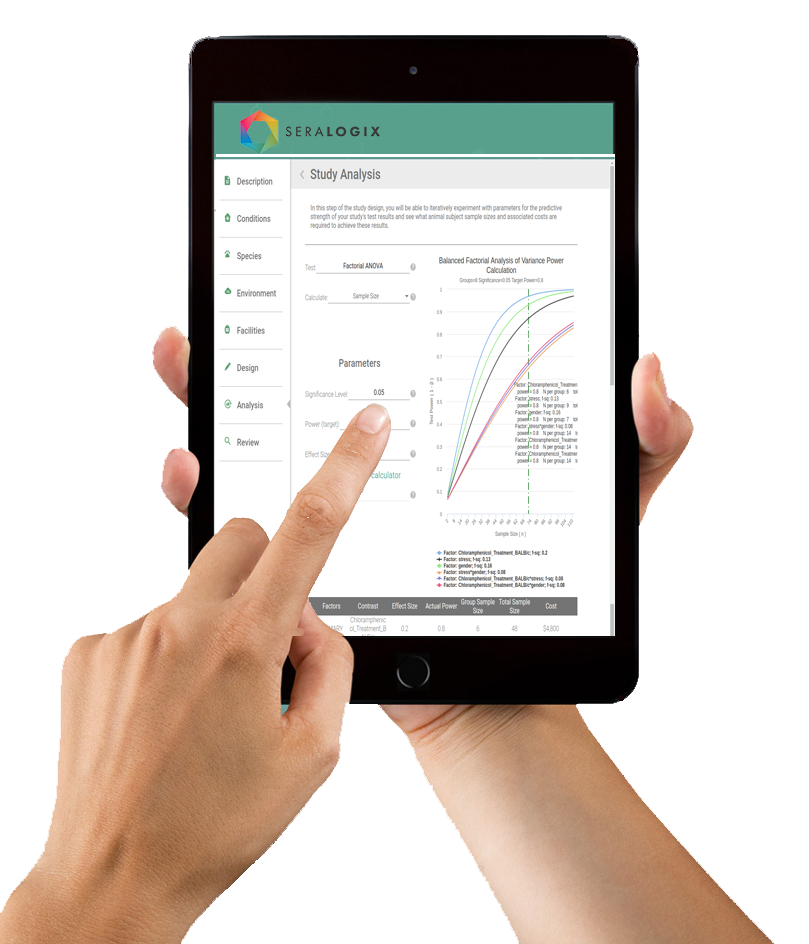
Designed for regulated and high-stakes preclinical research environments.